<Texture Studio

Free Online Image Dithering Tool

[ 5 KERNELS // CANVAS 2D ]
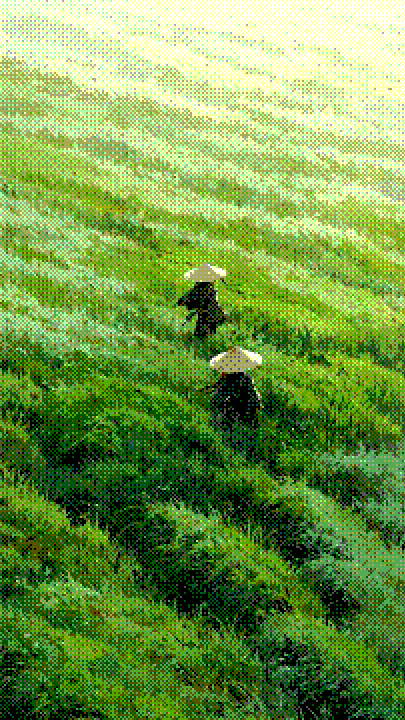
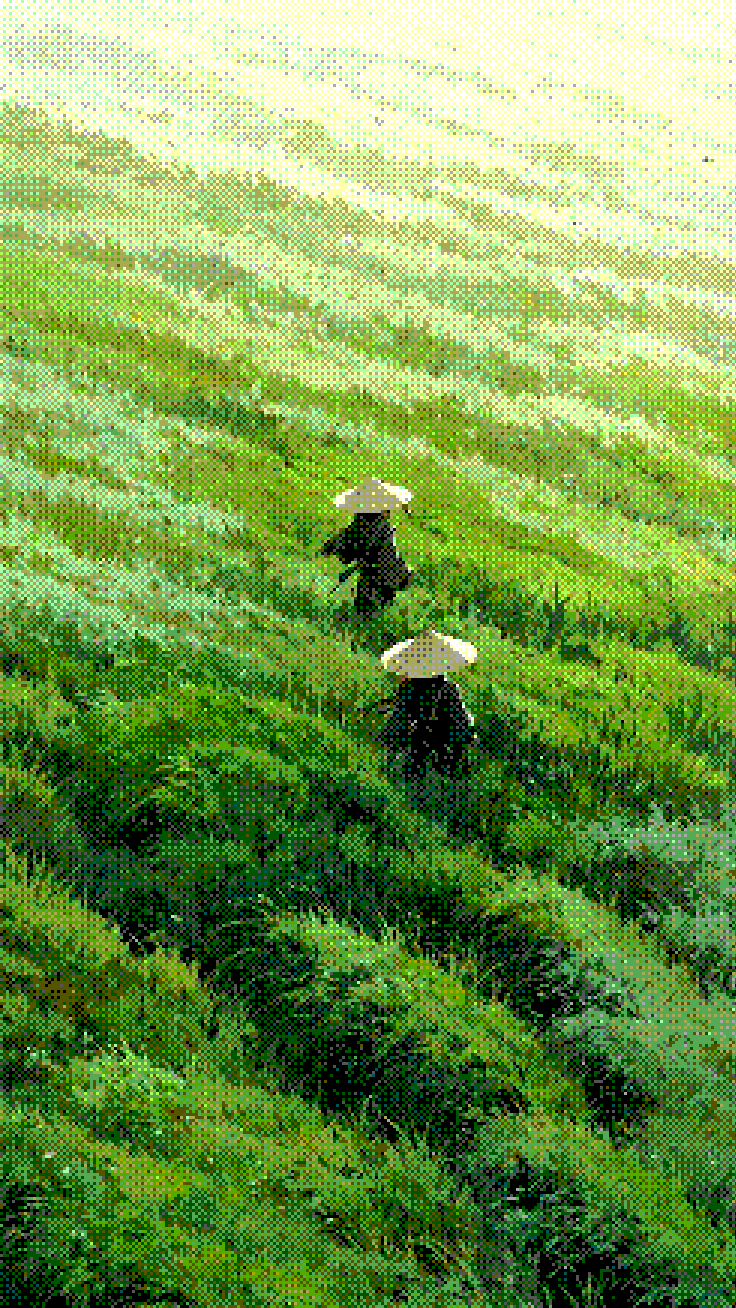
Bitgrain applied to the sample photo

How to dither an image online

  1. Drop a photo onto the canvas, paste it, or click to choose one. It never leaves your browser.
  2. Pick Bitgrain for Bayer ordered dithering, or a Grain filter for 1-bit error diffusion (Cobalt Grain is Floyd–Steinberg, Denim Grain is Atkinson), then move Detail to set the dot size.
  3. Export the PNG. No account, no watermark.

How dithering works

Dithering fakes shades that a limited palette cannot actually show, by trading colour depth for spatial detail. Your eye averages a scatter of black and white dots back into grey. This tool ships both families of the technique, because they fail in completely different ways.

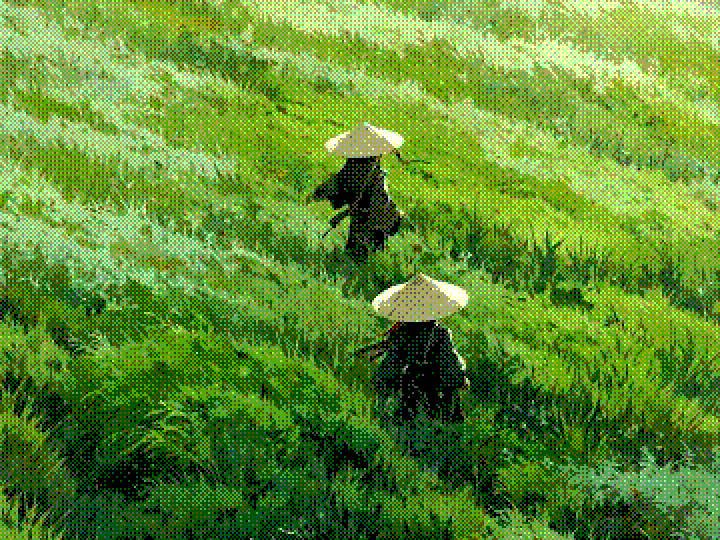
Bitgrain is ordered dithering. It compares each block against an 8x8 Bayer matrix — a fixed 64-step threshold lattice — and quantises to three, four or five levels per channel depending on the detail setting. Ordered dithering is deterministic and tiles perfectly, which is why it produces that regular crosshatch texture familiar from early games and printed newspapers.

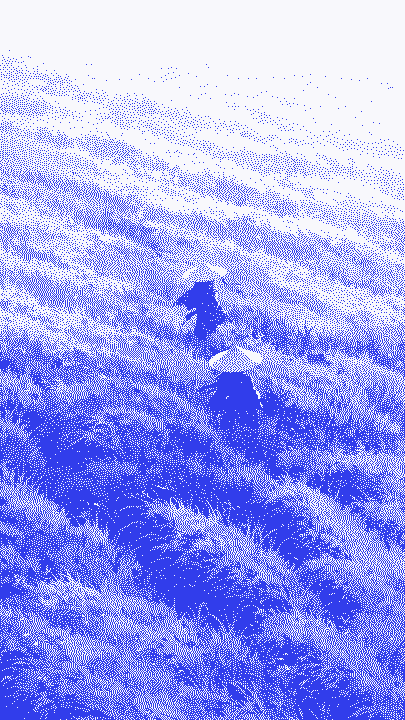
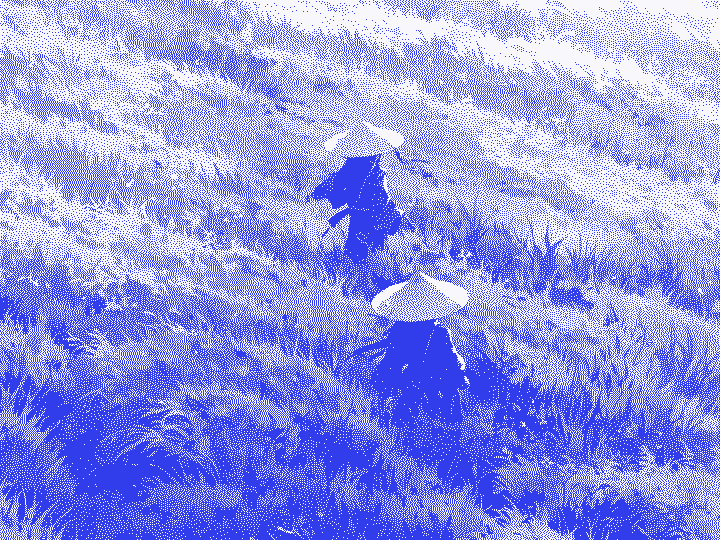
The four Grain filters are error diffusion, and they run in true 1-bit: one ink colour on one paper colour, no intermediate tones at all. After thresholding each cell, the leftover error is pushed into neighbours that have not been visited yet, so the image self-corrects as the scan proceeds. Each colourway uses a different diffusion kernel, and the scan runs boustrophedon — alternating direction every row — to stop the error drifting consistently to one side.

FilterMethodKernelOutput
BitgrainOrdered8x8 Bayer3–5 levels per channel
Cobalt GrainError diffusionFloyd-Steinberg1-bit, blue ink
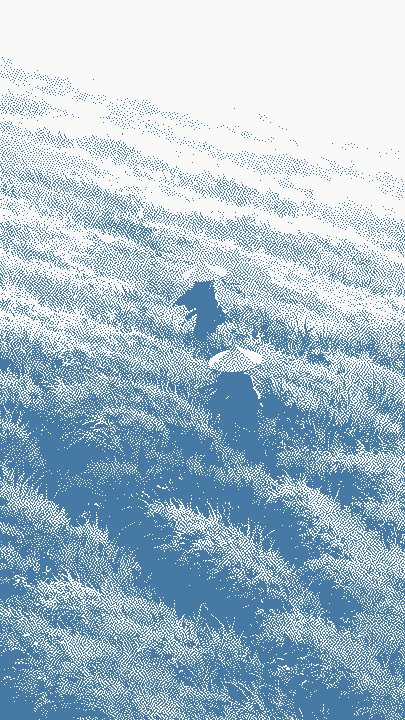
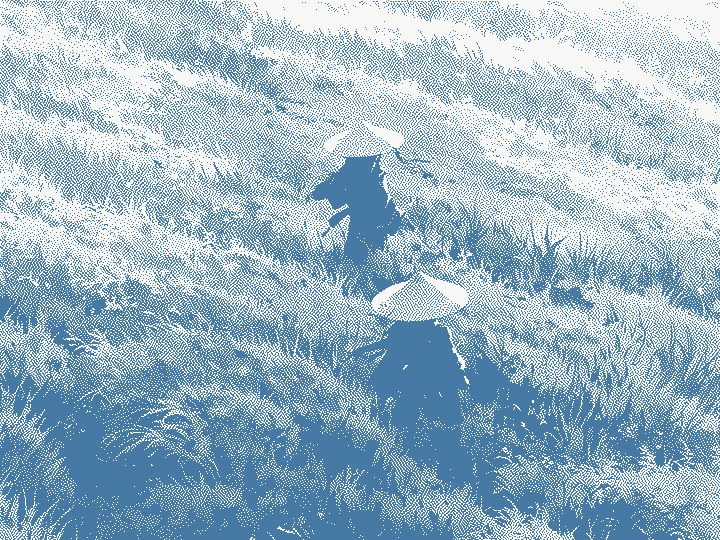
Denim GrainError diffusionAtkinson1-bit, indigo ink
Harbor GrainError diffusion3-tap1-bit, teal ink
Meadow GrainError diffusion7-tap, two rows1-bit, green ink

Atkinson deliberately discards part of the error, which lifts contrast and leaves cleaner whites — that is the look old Macintosh screens had. Floyd-Steinberg keeps all of it and preserves more midtone gradation.

Everything runs on Canvas 2D on your own device. No upload, no account, PNG out at up to a 1400px long edge.

Best for

  • Zines and photocopied flyers
  • Gig posters and one-colour print mockups
  • Retro computer and game-style artwork
  • Album covers with a 1-bit look

> Examples

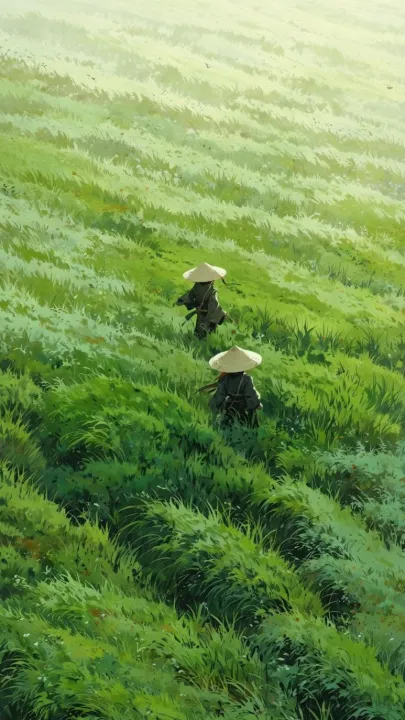
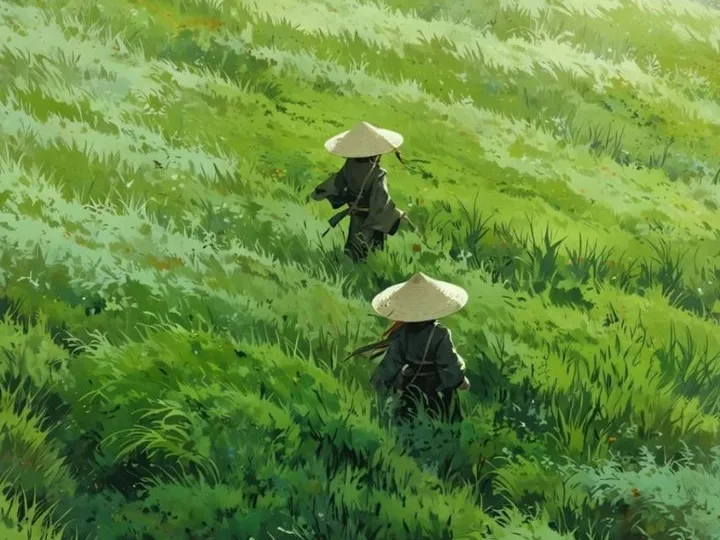
The same illustration run through this page's filters at their default settings — rendered by the exact engine above, not mock-ups.

Illustration of two travellers in straw hats crossing a wind-swept grassy hillside — original image before any filter
Beforeoriginal, no filter
Illustration of two travellers in straw hats crossing a wind-swept grassy hillside, after the Bitgrain filter — 8×8 Bayer ordered-dither crosshatch
Bitgrain8×8 Bayer ordered-dither crosshatch
Illustration of two travellers in straw hats crossing a wind-swept grassy hillside, after the Cobalt Grain filter — 1-bit blue-ink Floyd–Steinberg grain
Cobalt Grain1-bit blue-ink Floyd–Steinberg grain
Illustration of two travellers in straw hats crossing a wind-swept grassy hillside, after the Denim Grain filter — 1-bit indigo Atkinson grain
Denim Grain1-bit indigo Atkinson grain
Close crop of the two straw-hat travellers walking through tall green grass — original image before any filter
Beforeoriginal, no filter
Close crop of the two straw-hat travellers walking through tall green grass, after the Bitgrain filter — 8×8 Bayer ordered-dither crosshatch
Bitgrain8×8 Bayer ordered-dither crosshatch
Close crop of the two straw-hat travellers walking through tall green grass, after the Cobalt Grain filter — 1-bit blue-ink Floyd–Steinberg grain
Cobalt Grain1-bit blue-ink Floyd–Steinberg grain
Close crop of the two straw-hat travellers walking through tall green grass, after the Denim Grain filter — 1-bit indigo Atkinson grain
Denim Grain1-bit indigo Atkinson grain

> Frequently Asked

What is image dithering?
Dithering approximates colours a limited palette cannot display by scattering the available colours in a pattern. Viewed at normal distance, the eye averages the pattern back into the intended shade, trading colour depth for spatial detail.
What is the difference between ordered and error-diffusion dithering?
Ordered dithering compares each pixel against a fixed threshold matrix, so it is fast, deterministic and visibly regular. Error diffusion pushes each pixel rounding error into its neighbours, which produces an organic, less repetitive grain but depends on scan order.
Which filter gives true 1-bit black and white?
The four Grain filters. Each one renders a single ink colour on a single paper colour with no intermediate tones. Bitgrain instead quantises to three to five levels per channel, so it keeps some colour.
Why does Atkinson look higher contrast than Floyd-Steinberg?
Atkinson deliberately discards a portion of the accumulated error instead of distributing all of it. Highlights blow out cleaner and shadows deepen, which is the look classic Macintosh displays had.
Is the dither converter free and private?
Yes. It runs entirely in your browser through Canvas 2D, so the image is never uploaded, and the PNG export carries no watermark.

Images are processed in your browser and never uploaded. The site keeps anonymous usage analytics (page views, chosen filter, file size) — never pixel data.